
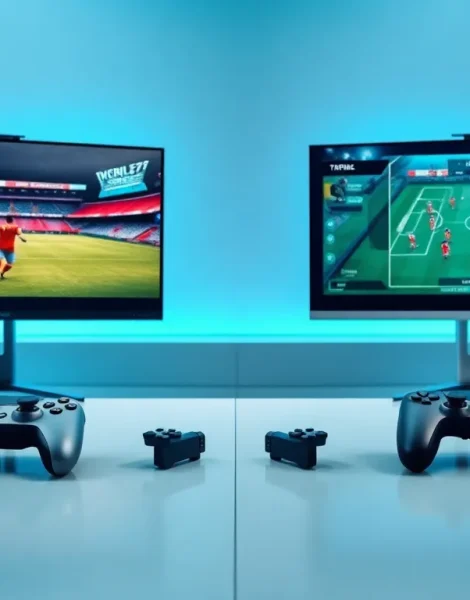
FIFA vs PES represents the longest-running rivalry in sports gaming history. For over two decades, these franchises have competed for the attention of soccer fans worldwide. EA Sports’ FIFA (now EA Sports FC) and Konami’s Pro Evolution Soccer (now eFootball) offer distinct approaches to virtual soccer. Each game has loyal fans who swear by their preferred title. This comparison breaks down the key differences between FIFA vs PES across gameplay, licensing, features, and visuals. Whether someone is a casual player or a dedicated soccer gaming enthusiast, understanding these differences helps make the right choice.
Table of Contents
ToggleKey Takeaways
- FIFA vs PES represents the longest-running rivalry in sports gaming, with FIFA offering fast, accessible gameplay while PES delivers a slower, more tactical simulation experience.
- FIFA dominates licensing with official team names, stadiums, and player likenesses, while PES relies on exclusive club partnerships and community-created patches.
- Ultimate Team drives FIFA’s online experience through card collecting and competitive play, whereas PES’s Master League offers deeper single-player career progression.
- FIFA’s Frostbite engine produces superior visuals and stadium atmospheres, giving it a clear edge in graphics and presentation over eFootball.
- Choosing between FIFA vs PES comes down to your priorities—authentic licenses and quick action favor FIFA, while tactical depth and lower microtransaction spending favor PES.
- eFootball is now free-to-play, making it an accessible entry point for players who want to test the PES experience without financial commitment.
Gameplay and Mechanics
The FIFA vs PES debate often starts with gameplay. Both games simulate soccer, but they feel different in players’ hands.
FIFA focuses on speed and accessibility. Matches move at a quick pace. Players can pick up a controller and score goals within minutes. The game uses physics-based animations that create responsive controls. Skill moves are easy to execute with simple button combinations. This approach makes FIFA appealing to newcomers and casual players.
PES takes a slower, more tactical approach. The game emphasizes ball control and player positioning. Passing requires precision. Players must read the defense and time their runs carefully. PES rewards patience and strategic thinking. Long-time soccer fans often appreciate this realistic pacing.
Defending also differs between the two. FIFA allows aggressive pressing with minimal risk. Players can pressure opponents without losing defensive shape. PES punishes mistakes more harshly. A poorly timed tackle leaves gaps that skilled opponents exploit quickly.
In the FIFA vs PES comparison, the gameplay preference often comes down to personal style. Those who want arcade-style action lean toward FIFA. Those seeking simulation-style depth prefer PES.
Licensing and Team Authenticity
Licensing creates the biggest gap between FIFA vs PES. EA Sports has spent billions securing official rights. FIFA includes real team names, stadiums, kits, and player likenesses. The Premier League, La Liga, Bundesliga, Serie A, and MLS all appear with full authenticity.
PES struggles in this area. Konami holds fewer licenses. Many leagues appear with fictional names. Manchester United becomes “Man Red.” Arsenal becomes “North London.” This lack of authenticity frustrates players who want the real soccer experience.
But, PES compensates with certain exclusive deals. The game has partnered with clubs like Barcelona, Juventus (previously), and Bayern Munich for special content. PES also allows community-created patches. Players can download files that add real names, kits, and logos. This workaround helps, but requires extra effort.
For most players, FIFA wins the licensing battle in the FIFA vs PES matchup. Walking out at an accurate Old Trafford or Camp Nou adds immersion. Seeing correct player faces and hearing authentic commentary enhances the experience. PES fans accept the trade-off for gameplay they prefer.
Game Modes and Features
Both franchises offer various ways to play. FIFA vs PES differs significantly in mode depth and variety.
FIFA’s Ultimate Team dominates the market. Players build dream squads by collecting cards. They compete in online seasons and weekend leagues. Ultimate Team generates massive revenue for EA through microtransactions. Critics argue it encourages pay-to-win behavior. Supporters enjoy the team-building aspect and competitive structure.
FIFA also includes Career Mode for single-player fans. Players manage clubs, sign players, and develop youth talent. The mode receives yearly updates, though fans often request more depth. Volta Football adds street soccer with smaller teams and trick-based gameplay.
PES counters with Master League. This career mode lets players take control of any club. Master League emphasizes player development and transfer negotiations. Many consider it superior to FIFA’s Career Mode in terms of player progression systems.
PES also features myClub, similar to Ultimate Team. Players collect and train athletes to build competitive rosters. The mode offers a less aggressive monetization approach than FIFA.
In the FIFA vs PES feature comparison, FIFA provides more modes overall. PES delivers deeper experiences in its core offerings. Players should consider which modes matter most to them.
Graphics and Presentation
Visual quality matters in sports games. FIFA vs PES shows interesting differences in this area.
FIFA uses the Frostbite engine. This technology produces excellent lighting and stadium atmospheres. Crowds look lively. Broadcast-style cameras capture the action dramatically. Player faces benefit from extensive scanning technology. Stars like Mbappé and Haaland look remarkably lifelike.
PES traditionally used the Fox Engine. Player animations often looked more natural during gameplay. Movement appeared fluid and realistic. But, stadiums and crowds sometimes lacked FIFA’s polish.
Recent versions show changes. EA Sports FC continues pushing visual boundaries. eFootball (formerly PES) launched with significant graphical issues in 2021. Konami has worked to improve visuals through updates, but the gap widened.
Commentary and sound design also differ. FIFA features recognizable voices and dynamic commentary. PES has improved its audio package over the years but often sounds repetitive during long sessions.
The FIFA vs PES graphics debate now favors FIFA. EA’s resources allow for cutting-edge visuals. Konami’s smaller budget shows in presentation quality.
Which Game Is Right for You
Choosing between FIFA vs PES depends on individual priorities.
Pick FIFA if:
- Official licenses and authentic teams matter most
- Quick, accessible gameplay appeals to you
- Ultimate Team’s card-collecting hooks you
- Playing with friends who own the same game is important
- Visual presentation influences your enjoyment
Pick PES if:
- Tactical, simulation-style gameplay is the priority
- Master League’s depth interests you
- Workarounds for licensing don’t bother you
- Spending less on microtransactions matters
- You prefer a different pace and feel
Many players own both games. They play FIFA for online matches with friends and PES for single-player campaigns. The FIFA vs PES rivalry benefits consumers. Competition pushes both developers to improve.
Budget also factors in. FIFA releases annually at full price. eFootball is now free-to-play, lowering the barrier to entry. Players can try eFootball without financial commitment.


